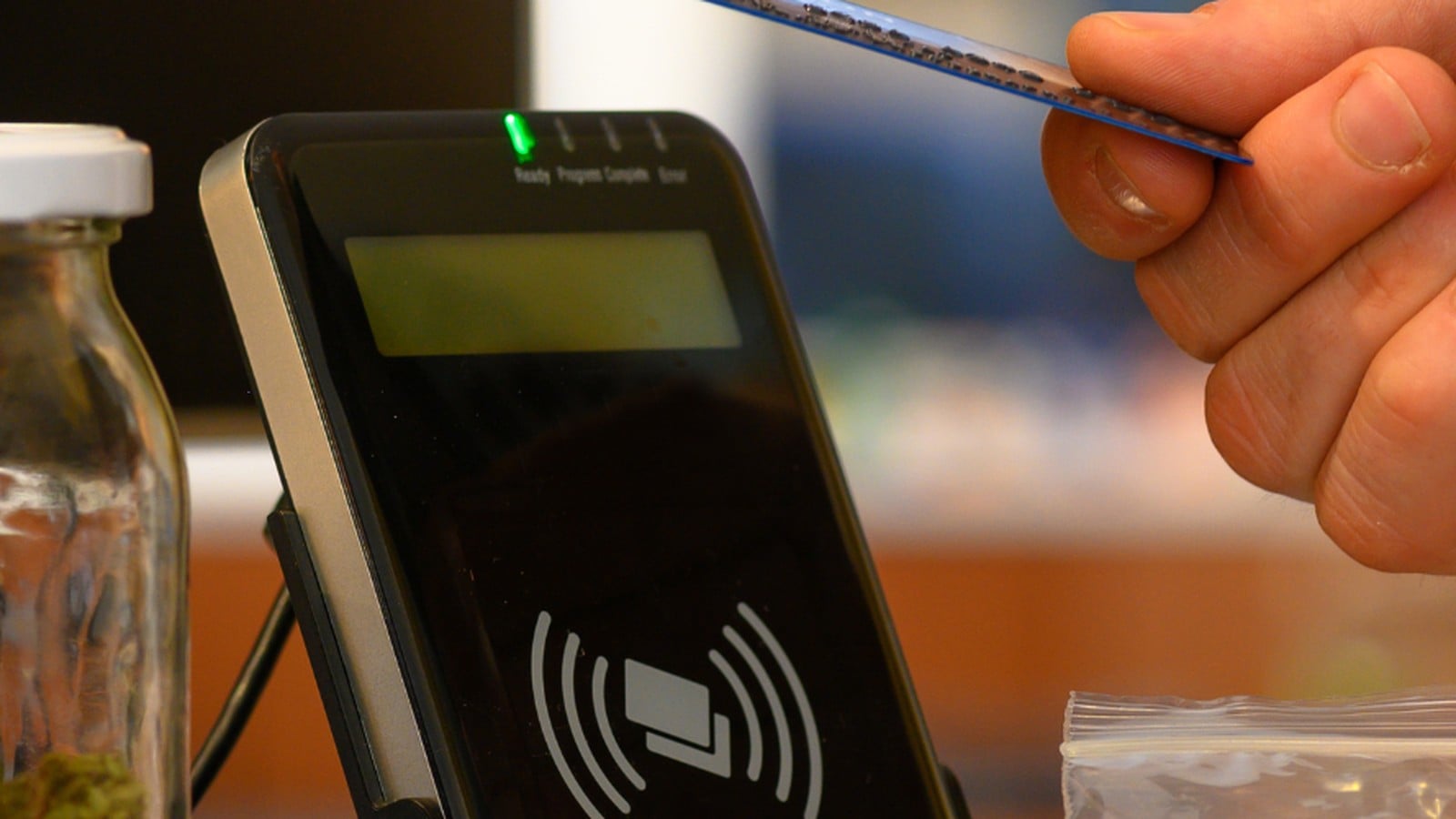

As dispensaries continue modernizing their payment options in 2026, ACH, traditional crypto, and emerging stablecoin solutions are becoming key alternatives to cash. Discover which is better ACH or Crypto Payments for dispensaries. ACH provides predictable, bank-supported transfers at low cost. Traditional crypto offers speed but comes with volatility and evolving regulatory expectations. Stablecoins bridge the gap by delivering blockchain settlement speed with the price stability of fiat currency, making them a practical digital payment option for cannabis operators. Most dispensaries rely on ACH for everyday transactions while exploring stablecoins as a fast, transparent, and operationally friendly complement to their payment stack.
The cannabis payment challenge in 2026
The cannabis industry has never had more customers, yet accepting digital payments can still feel more complicated than the sale itself. Many dispensary operators have explored cryptocurrency as a way to modernize the checkout experience, only to run into the same roadblocks. Traditional crypto swings in value by the hour, making it difficult to finalize retail transactions with confidence. Even when a sale goes smoothly, dispensaries face another hurdle: the limited availability of business-friendly crypto wallets and banking partners willing to convert those assets into usable fiat.
These challenges underscore why dispensaries continue searching for payment methods that are fast, predictable, and compliant. ACH transfers remain a dependable option because they connect directly to the banking system and deliver consistent settlement. Cashless ATMs, when deployed through compliant providers, also play an important role in reducing cash handling. Meanwhile, operators still see potential in blockchain-based transactions if the volatility and conversion barriers can be addressed.
This is where the conversation around stablecoins is starting to shift. By pairing blockchain efficiency with stable fiat value, compliant stablecoin payment platforms have the potential to resolve many of the issues that limit traditional crypto for cannabis. As solutions like the one being introduced by Bankcard International Group reach the market, dispensaries gain a clearer path toward adopting digital currency in a way that aligns with operational, compliance, and banking requirements.
Understanding how ACH, traditional crypto, and stablecoins differ gives operators the insight they need to choose the payment tools that best support their business model and customer experience.
ACH payments for dispensaries
ACH stands for Automated Clearing House. It is an established U.S. payment network that moves money electronically between bank accounts. For dispensaries, ACH payments provide a reliable, transparent, and compliant way to accept digital transactions without relying on card networks.
Cost and settlement
ACH is one of the most affordable electronic payment methods available to cannabis businesses. Transaction costs typically range from 1.5% to 2.5%, often lower than card or crypto transactions. Settlement times are usually one to two business days, with some processors offering same-day ACH for faster turnaround.
This predictable settlement process makes accounting and reconciliation simple, which is essential for state-licensed cannabis operations that require detailed reporting.
Banking acceptance
ACH payments are processed directly through regulated financial institutions, which helps dispensaries maintain strong banking relationships. When managed by a cannabis-compliant processor, ACH transactions are transparent and traceable, aligning with FinCEN guidance for cannabis banking.
Key advantages
- Transparent, auditable payment records
- Predictable costs and fast reconciliation
- Easy integration with dispensary point-of-sale systems
- Lower operational risk from handling cash
- Compatible with loyalty and e-commerce programs
ACH has become a trusted option for cannabis operators who want to move away from cash while maintaining full financial visibility.
Crypto payments for dispensaries
Stablecoins deserve their own explanation because they operate differently than traditional cryptocurrencies. While Bitcoin and similar assets fluctuate in price, stablecoins are designed to maintain a consistent value relative to the U.S. dollar. This stability makes them far more practical for retail transactions, accounting, and tax reporting. A compliant stablecoin platform also allows dispensaries to benefit from blockchain settlement speed without exposing the business to price swings or custody risks.
Volatility and stability
Traditional cryptocurrencies can fluctuate in value, which affects the amount a dispensary receives if funds are not converted immediately to fiat currency. Stablecoins—digital tokens pegged to the U.S. dollar—help address this issue by maintaining a consistent value.
Fees and conversion
Fees for crypto payments depend on the blockchain network and the processor used. Some transactions can cost just a few cents, while others may vary based on network congestion. Many dispensaries choose to work with crypto merchant service providers that automatically convert digital currency into fiat deposits, simplifying accounting and reducing exposure to price volatility. However, recent changes in federal oversight have cracked down on platforms performing instant conversions without holding a Money Transmission License, because in order to convert the currency the platform must take temporary control of the currency.
Banking and regulatory considerations
Crypto is legal to use, but banking and regulatory acceptance are still developing. Dispensaries must ensure that crypto payments are processed through compliant providers that perform customer verification, maintain AML controls, and provide transparent reporting for audits and tax filing.
Key advantages
- Fast, often near-instant settlement
- Elimination of chargebacks
- Access to a growing segment of crypto-using consumers
- Global payment capability across multiple markets
Crypto provides innovation and flexibility, especially for businesses that want to attract tech-forward customers or operate in multiple states.
Why stablecoins are emerging as the next logical step for cannabis payments
Stablecoins are quickly gaining attention in the cannabis industry because they solve many of the challenges that come with traditional cryptocurrency. They are digital tokens designed to maintain a consistent value relative to the U.S. dollar, which means dispensaries can access the benefits of blockchain technology without taking on the pricing volatility that makes assets like Bitcoin difficult to use in retail environments.
For dispensaries, this stability is significant. One of the biggest barriers to adopting crypto payments has always been the risk that the value of the currency could change between checkout and settlement. Stablecoins eliminate this concern, creating a predictable and reliable digital payment method that can support both in-store and delivery transactions.
Stablecoins also offer near-instant settlement, similar to other blockchain-based payments. Funds move quickly, and transactions can be verified on the blockchain for full transparency. This efficiency improves cash flow, reduces operational friction, and helps operators maintain clean, auditable payment records.
When stablecoins are delivered through a compliant payment platform, the benefits extend even further. A properly structured system will include customer verification, AML oversight, transaction monitoring, and conversion through regulated financial channels. These safeguards align with cannabis banking expectations and support the level of transparency required from licensed operators.
For these reasons, stablecoins represent a practical bridge between the speed of crypto and the predictability of traditional fiat payments. As compliant platforms become available, stablecoins are positioned to play an increasingly important role in the cannabis payment ecosystem, offering dispensaries a modern, secure, and operationally friendly alternative to legacy digital currency models.
ACH in retail dispensaries
For brick-and-mortar dispensaries, ACH provides a reliable and straightforward solution for digital payments. Customers can complete purchases using a simple mobile app or QR code linked to their bank account. Funds move securely and are easily tracked, simplifying reconciliation and compliance reporting.
Retail teams appreciate ACH for its affordability, stability, and the ability to integrate seamlessly into existing POS and loyalty systems.
ACH in delivery or online models
ACH offers a traditional approach to online sales. Consumers that are familiar with ACH payments and those that are less likely to adopt crypto happily prepay or order delivery by ACH.
Stablecoins in retail and delivery use cases
Stablecoins integrate well into both retail and delivery models because they provide the speed of blockchain with the predictability of fiat value. This removes the volatility concerns that limit the use of traditional crypto in cannabis transactions.
In retail settings, stablecoins appeal to customers who prefer mobile wallets and digital checkout. Their consistent pricing simplifies reconciliation, supports accurate daily reporting, and helps reduce cash handling on site. Near-instant settlement also improves cash flow and overall operational efficiency.
Stablecoin payments in retail dispensaries
Stablecoins address one of the biggest challenges with digital payments: finalizing the correct transaction amount at drop-off. Because stablecoins hold a steady value, drivers and customers can complete payments confidently without worrying about price fluctuation during transit. The fast settlement and clear audit trail also support compliance and state reporting requirements.
Stablecoins payments for cannabis delivery
In delivery models, stablecoins offer an especially strong advantage. Traditional cryptocurrencies can fluctuate in value between order placement and arrival, which creates complications for operators who need to finalize payments at the point of delivery. Stablecoins eliminate this issue, allowing the driver and customer to complete a transaction with confidence that the payment amount accurately reflects the purchase price. The speed of blockchain settlement helps delivery teams move efficiently from one stop to the next, while the transparency of the ledger supports auditing and state-level reporting requirements.
As compliant stablecoin platforms enter the market, dispensaries can apply them across both retail and delivery channels to create a faster, more predictable, and customer-friendly payment experience.
Why choose ACH OR crypto payments for dispensaries?
Many multi-location dispensaries and large operators are finding value in offering both ACH and crypto. ACH serves as the everyday payment method, while crypto adds flexibility and transactional speed. A hybrid payment model allows dispensaries to remain adaptable as consumer preferences and regulatory frameworks evolve.
The hybrid approach: combining ACH and stablecoins for a modern payment strategy
Many dispensaries are beginning to adopt a hybrid payment model that gives customers more choice while keeping operations streamlined and compliant. In earlier years, this often meant offering ACH alongside traditional cryptocurrency. Today, that approach is evolving as stablecoins emerge as a more practical digital asset for everyday retail transactions.
ACH remains the foundation for most cannabis businesses because it is predictable, bank-integrated, and easy to reconcile. Stablecoins add a complementary layer by providing fast settlement and a smooth digital experience without the pricing risks associated with other forms of crypto. Together, they create a balanced payment ecosystem that supports both operational efficiency and customer convenience.
A compliant stablecoin platform can also operate in parallel with ACH inside the same reporting and settlement environment. This consistency reduces administrative work, simplifies reconciliation, and allows finance teams to maintain clear, consolidated records across multiple payment types.
For operators looking to modernize without adding unnecessary complexity, the combination of ACH and stablecoins offers a forward-looking yet practical roadmap. It gives dispensaries flexibility today while preparing them for the continued evolution of digital payments in the cannabis industry.
Electronic payments for cannabis are good for growth and profits
Both ACH and crypto payments offer value to dispensaries seeking reliable cashless solutions. ACH remains the most practical choice for everyday operations because of its low cost, clear audit trail, and banking compatibility. Crypto adds an innovative element that can help dispensaries differentiate their brand and attract certain customer segments.
As the cannabis industry moves toward greater financial transparency and digital modernization, stablecoins may become an important part of the payment ecosystem. When supported by a compliant infrastructure that aligns with banking requirements, stablecoins offer a blend of speed, predictability, and technological advancement that complements both ACH and traditional crypto.
Electronic payments not only are more cost effective than the cost of handling cash but they also improve safety and increase the average sale amount. Its a win win!
Ready to explore compliant, cashless cannabis payment options?
The emergence of compliant stablecoin payment technology represents a meaningful advancement for the cannabis industry. It provides operators with a digital payment method that delivers the speed and efficiency of blockchain while maintaining the predictability and oversight required in a regulated market. As solutions like the stablecoin platform being introduced by Bankcard International Group become available, dispensaries will gain access to modern payment options that bring innovation and compliance together in a cohesive, operationally friendly system.
BIG specializes in Cannabis Payment Processing, including ACH and crypto payment solutions designed for licensed cannabis operators nationwide.
Common questions
- Can dispensaries legally use crypto for payments?
- Yes. Dispensaries can legally accept cryptocurrency when processed through a compliant provider that performs KYC and AML verification and provides proper reporting. Additionally it is important that the business its own crypto wallet to avoid money laundering and comingling problems.
- Are ACH payments compliant for cannabis businesses?
- Yes. When handled by a cannabis-compliant processor, ACH payments align with FinCEN guidelines and provide transparent transaction records.
- How can dispensaries manage both ACH and crypto payments?
- By using an integrated payment provider, dispensaries can accept ACH and crypto simultaneously, convert funds automatically, and maintain accurate records for audits and taxes.
- What payment method do most dispensaries prefer in 2026?
- In 2026 consumer adoption of stablecoin payments is far greater than ACH and most dispensaries are seeing a much greater reduction in costs and cash when they implement stablecoin payments.
- How are stablecoin payments different from other types of cryptocurrency for dispensaries?
- Stablecoins are digital tokens designed to maintain a consistent value relative to the U.S. dollar. This removes the volatility associated with traditional cryptocurrencies. When offered through a compliant payment platform, stablecoin transactions can be monitored, verified, and converted to fiat currency in a way that aligns with cannabis regulatory and banking expectations.