
TL;DR:  Getting labeled with a “high risk business classification” isn’t the end of the road. It’s a call to refine your operations. Businesses are often classified as high risk because of chargebacks, industry type, regulatory scrutiny, or inconsistent processing history. Understanding these merchant account risk factors, and working with an experienced high risk payment processor, can help you stabilize your accounts, lower costs, and build long-term payment resilience.

When Your Business Gets Flagged: What a “High Risk Business Classification” Really Means

You’ve built a thriving business, submitted your payment processing application, and expect a quick approval. Then you get the email: “Your business has been classified as high risk.”

It’s a moment that stops many entrepreneurs cold. High risk business classification can feel like a penalty with higher fees, rolling reserves, or even outright declines from traditional banks. But the truth is, this label often has more to do with underwriting risk factors than your integrity or professionalism.

Let’s demystify what “high risk” really means, why businesses are labeled this way, and how to fix it.

The BIG Blog about: The Real Reasons Behind a High Risk Business Classification (and How to Fix It) Body ImageWhy Businesses Get a High Risk Business Classification

Industry Type and MCC Codes

One of the primary drivers of high risk business classification is your industry’s Merchant Category Code (MCC). These four-digit codes categorize your business type for card networks and banks.

Certain industries such as travel, nutraceuticals, firearms, subscription boxes, and CBD naturally carry higher levels of refunds, chargebacks, or regulatory oversight.

Banks rely on MCC codes to assess underwriting risk. If your business falls within an MCC associated with elevated disputes or compliance exposure, you’ll likely be flagged as high risk automatically.

Examples of high risk MCC codes include:

  • 5967 – Direct Marketing: Inbound Telemarketing
  • 5122 – Drugs, Proprietaries, and Sundries
  • 7995 – Betting, Casino Gaming Chips
  • 7273 – Dating and Escort Services

These designations don’t mean your business is unstable. They simply indicate that your industry’s risk profile exceeds the bank’s comfort zone for standard underwriting.

Chargeback Ratios and Transaction Patterns

Your chargeback ratio is another key indicator. If chargebacks exceed 1% of total transactions, your account is almost guaranteed to be flagged.

Frequent disputes suggest potential customer dissatisfaction, unclear billing, or fraud exposure, which are all red flags for processors. Even well-run companies can cross that threshold during seasonal spikes or marketing campaigns.

Patterns that elevate risk include:

  • Large average ticket sizes
  • Recurring billing models
  • International transactions
  • Sudden volume spikes

Processors view these as signs that transaction volatility could translate to financial exposure, a liability they must manage.

Regulatory or Legal Exposure

If your business operates in a heavily regulated sector, such as CBD, firearms, Cannabis, or adult content, underwriting becomes more complex. Banks must navigate federal, state, and card brand compliance frameworks, which can shift rapidly.

Even if your company is fully compliant, the mere presence of regulatory uncertainty can classify your business as high risk.

For example, cannabis and CBD merchants cannot accept credit cards for plant-touching sales due to federal restrictions. Payment processors must use alternative routing methods and enhanced due diligence to support these industries safely.

Limited or Poor Processing History

Underwriters prefer to see a stable, verifiable processing history. If your business is new, has switched between providers, or shows chargeback trends, you’ll likely face closer scrutiny.

Without historical data, banks can’t easily forecast your risk exposure. This uncertainty pushes them to apply the high risk classification until consistent performance is established.

The Hidden Costs of a High Risk Business Classification
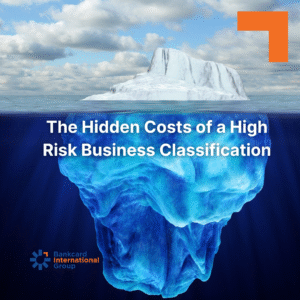
Being labeled as a high risk merchant doesn’t stop you from accepting payments, but it does change your cost structure and options.

Higher Processing Fees and Reserves

High risk accounts typically come with higher discount rates and rolling reserves. These buffers protect the processor against chargebacks and fraud but can squeeze your margins.

While a standard merchant might pay 2.5% + 25¢ per transaction, a high risk merchant could face 4% or more, plus 5–10% of each batch held in reserve for 90–180 days.

Limited Banking Relationships

Many traditional banks simply won’t work with high risk industries. This limits your options and can lead to processing instability, especially if your provider suddenly terminates your account.

A surprise account freeze or closure can paralyze cash flow, something no business can afford.

Account Scrutiny and Instability

High risk accounts are subject to ongoing monitoring. Excessive disputes, unclear marketing, or noncompliant practices can trigger holds or termination.

This uncertainty can make it difficult to plan for growth, attract investors, or maintain predictable revenue.

How to Fix a High Risk Business Classification

The good news is that you can reduce your perceived risk and stabilize your payment environment. It starts with managing the same metrics that underwriters evaluate.

Reduce Chargebacks Proactively

  • Use clear billing descriptors customers will recognize
  • Send email or SMS confirmations for every order
  • Implement fraud filters and address verification (AVS)
  • Offer responsive, accessible customer support

The goal is to keep chargebacks below 0.9% of total transactions and issue refunds before disputes escalate.

Keep Marketing and Terms Clean

Avoid misleading claims or fine print that can lead to “product not as described” disputes. Be transparent about pricing, shipping times, and recurring billing cycles.

Align your website, checkout, and policies with card brand best practices. Consistency builds trust with both customers and underwriters.

Maintain Accurate Descriptors and Refund Policies

Ensure your merchant descriptor matches your brand name and website. Customers should instantly recognize your charge on their statement.

Offer clear refund and cancellation terms. Generous policies can reduce disputes and over time signal reliability to your processor.

Work with a Processor That Specializes in Your Industry

Many challenges with high risk merchant account solutions stem from mismatched partnerships. Generic processors often lack the expertise, networks, or risk tolerance needed for your business model.

A specialized high risk payment processor can structure your account to absorb volatility while keeping rates competitive and operations compliant.

How Bankcard International Group Helps High Risk Merchants Thrive

At Bankcard International Group (BIG), we believe that “high risk” doesn’t mean “bad business.” It means your company requires a smarter, more experienced payment partner.

BIG specializes in high risk payment processing across industries such as CBD, firearms, travel, nutraceuticals, and more. Our team works directly with acquiring banks that understand your sector and how to support it safely.

What Sets BIG Apart

  • Transparent Interchange Plus Pricing – Know exactly what you’re paying, with no inflated markups
  • Dedicated Account Management – Real people who understand your business, not just automated risk scoring
  • Chargeback Mitigation Tools – Early alerts, analytics, and prevention systems to protect your revenue
  • Compliance Expertise – Guidance to ensure your operations meet state, federal, and card brand standards

We don’t just get your account approved; we help keep it stable, profitable, and built for growth.

Ready to Take Control of Your Payment Future?

If your business has been labeled high risk, it doesn’t mean you can’t process payments effectively. It means you need a processor who understands your challenges and has the infrastructure to support you.

Ready to work with a payment partner who understands your business?
Contact Bankcard International Group today at 1-800-895-1580 or info@bighqs.com, or visit bankcardinternationalgroup.com to get started.

Your Business Deserves the Best - Go BIG Today:

Frequent High Risk Merchant Account Questions:

What does it mean to have a high risk business classification?

It means banks or processors view your industry or transaction profile as carrying higher financial or regulatory risk. This may result in higher fees or stricter underwriting requirements.

Can a business lower its risk status over time?

Yes. By reducing chargebacks, maintaining consistent processing, and following compliance best practices, many merchants can requalify for better rates or more flexible terms.

How can BIG help high risk merchants?

BIG offers tailored high risk merchant account solutions with transparent pricing, expert underwriting support, and tools to reduce chargebacks and improve long-term account stability.
author avatar
Rhett Baylies CMO

Leave a Reply

Your email address will not be published. Required fields are marked *