
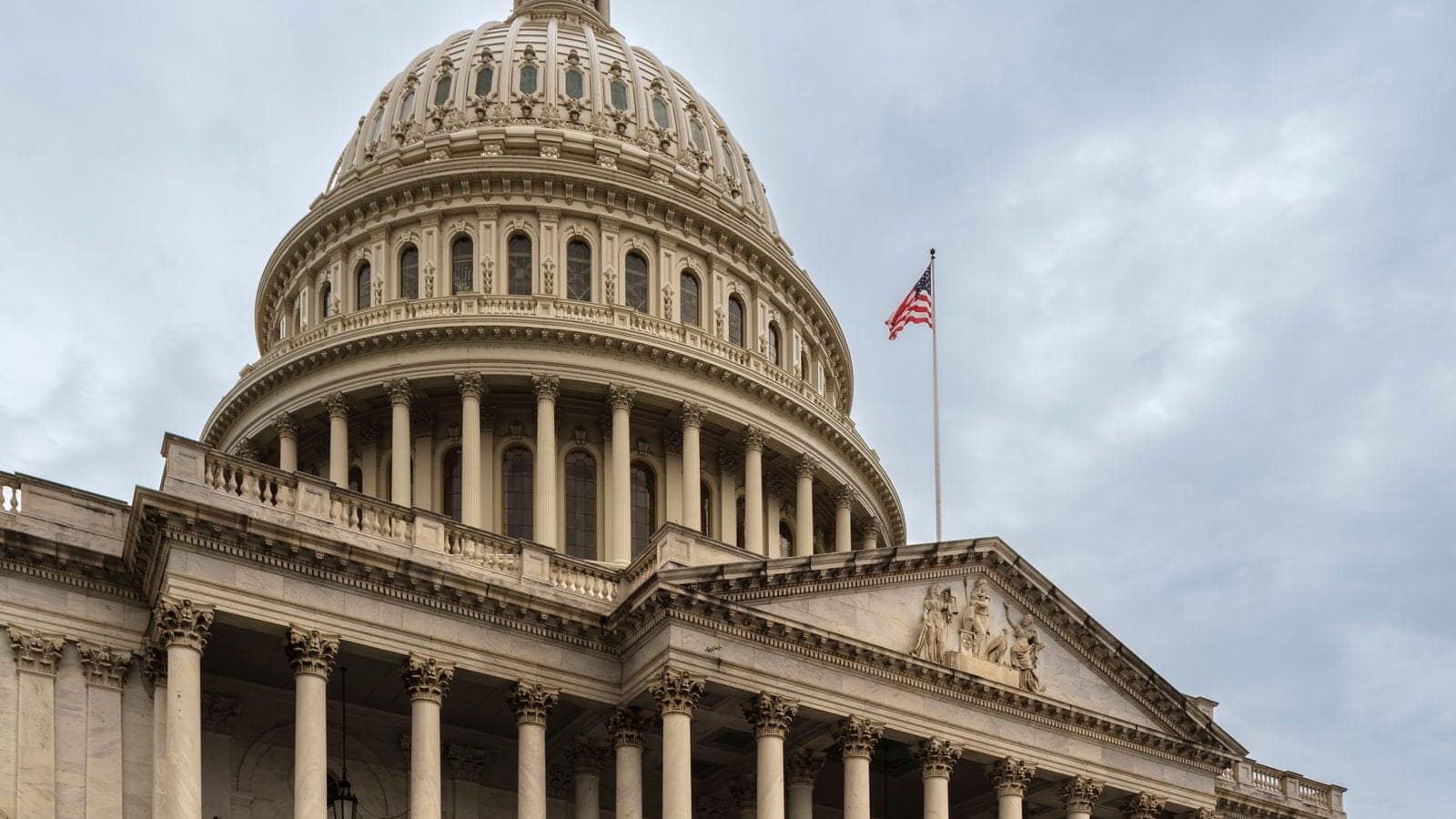
On 15 September the Senate declined to open debate on the CLARITY Act, and most of the coverage since has treated that as the collapse of crypto regulation. If you take payments, that framing misleads you twice. CLARITY was a market-structure bill about which regulator supervises which asset, and it excluded payment stablecoins from its own definitions. The law that governs payment stablecoins is the GENIUS Act, signed in July 2025. GENIUS is enacted but not yet in force, because the agency rules that make it operable are still proposals, with a statutory backstop date of 18 January 2027. So the stablecoin rules did not change this week, and what did change is narrower: a yield question stays open, and the detailed line-drawing moves from Congress to the SEC and the CFTC.
What happened on 15 September, in plain terms
The Senate held a cloture vote on the motion to proceed to H.R. 3633, the Digital Asset Market Clarity Act. Cloture on a motion to proceed is the procedural step that opens floor debate, and it needs 60 votes. The motion got 49 in favor and 50 against, with one senator not voting. Because it failed, the Senate never debated or amended the bill and never voted on its merits.
That matters for how you read the result. A failed cloture vote counts who was willing to start the conversation, and it says less about the bill's contents than the headlines suggest. This bill passed the House 294 to 134 in July 2025 and cleared the Senate Banking Committee 15 to 9 in May 2026, so the substance had enough support to get that far. What it lacked on 15 September was the sixty votes needed to bring it to the floor.
No Democrat voted yes, and four Republicans voted no: Collins, Hawley, Moran and Tillis. Senator Hawley's stated objection is the one worth remembering, because it is about your business. He said the bill's stablecoin reward and yield provisions would let crypto products compete unfairly with bank deposits. As it happens, the bill's failure cuts the opposite way from what he wanted, and we come back to that below.
The bill is not dead in any formal sense. H.R. 3633 has not been withdrawn, and cloture can be filed again, though as of 17 September no second attempt is scheduled. So the state of play is a bill that stalled on procedure, with its sponsors free to try again and no date for when they will.
CLARITY was not the stablecoin bill
Most of the confusion comes from running two pieces of federal digital-asset legislation together, and telling them apart does most of the work.
- The GENIUS Act. Public Law 119-27, signed 18 July 2025, and already enacted. This is the payment-stablecoin law. It sets who may issue a dollar stablecoin, what has to back it, how it is redeemed and who supervises the issuer.
- The CLARITY Act. H.R. 3633, a bill that is not law. This is market structure: which digital assets are commodities under the Commodity Futures Trading Commission, which are securities under the Securities and Exchange Commission, and how trading platforms register. Payment stablecoins are excluded from its digital-commodity definition.
So when someone tells you the stablecoin bill failed, they are describing a bill that carved payment stablecoins out of its own scope. The rules for the coin you would settle with, hold in treasury or pay out from were written a year earlier, in a different statute, and a cloture count does not touch that statute. If your plan was to accept a regulated dollar stablecoin at checkout, or to move settlement onto one, the legal basis for that plan is GENIUS, and GENIUS did not move on 15 September.
What CLARITY would have done for you is more indirect. It would have settled which agency polices the exchanges and custodians you might touch, and it would have added a second layer to the stablecoin yield rules. The coin itself, its issuer and the reserve behind it were a GENIUS question from the start. The second layer on yield is the part that changed, and it gets its own section below.
Enacted is not the same as in force
This is where the reassuring version of the story goes wrong in the other direction. GENIUS is law, but it is not yet operating. A statute like this hands the details to the regulators, and the regulators have not finished.
GENIUS takes effect on the earlier of two dates: 18 months after enactment, which is 18 January 2027, or 120 days after the final implementing rules are published. As of 17 September 2026 no final rules exist, and every implementing rule is still a proposal:
- The Office of the Comptroller of the Currency (OCC) proposed rule, published 25 February 2026, with comments closed 1 May 2026
- Two Federal Deposit Insurance Corporation (FDIC) proposals, dated 19 December 2025 and 10 April 2026
- A joint anti-money-laundering and customer identification proposal, the BSA/CIP rule, dated 5 June 2026
- The Treasury proposed rule, published 18 August 2026, with comments due 19 October 2026
Read that list as a calendar. The Treasury comment window is still open and nothing has been finalized, so the 120-day clock has not started. That makes the January 2027 backstop the date to plan around unless the agencies finish sooner. A provider that tells you it is GENIUS compliant today is describing a proposal it has read, because there is no final rule to have met. Ask which proposal, and ask what changes for you if the final text differs.
The yield question CLARITY would have closed
This is the part that did change, and it is the part Senator Hawley was worried about. The question is who is allowed to pay you for holding a stablecoin.
- What GENIUS already does. It bars the issuer of a payment stablecoin from paying interest or yield to holders, so the coin itself cannot carry a rate.
- What CLARITY would have added. It would have extended a prohibition to digital-asset service providers and their affiliates, so an exchange or wallet could not pay yield on the issuer's behalf. The May 2026 Senate Banking compromise text barred interest or yield on idle balances while allowing activity-based rewards.
- What stays open without it. The service-provider route: a platform that holds your stablecoin balance can still offer a reward on that idle balance, because the only prohibition Congress has enacted reaches the issuer, and the issuer is not the one paying.
The irony is that the senators who objected did so because reward and yield provisions would let stablecoins compete with bank deposits. By blocking the bill, they left in place the version of that competition with the fewest limits on it, since rewards on idle balances can continue under an issuer-only rule.
For a merchant or a treasurer, the practical effect is small but real. If a provider offers you a return on stablecoin float, that offer sits outside the issuer-only prohibition, and CLARITY is no longer on a schedule to change it. Read the terms and ask who is paying the reward and out of what. A reward a platform pays from its own revenue is a different thing from an issuer passing through reserve income, and the second one is what GENIUS bars.
Where the rulemaking goes now
The other change is about who draws the lines. Congress did not settle the boundary between the SEC and the CFTC, so the two agencies will keep drawing it themselves, through their own rulemaking, guidance and enforcement choices. That is how the industry has operated for years, and it gives you certainty more slowly and less durably than a statute would. Both agencies may move quickly now, but treat that as a forecast rather than a fact, and watch what each one actually publishes.
The banks are not waiting, and neither should your planning
If you want to know where settlement is going, watch the banks rather than the Senate. On 12 December 2025 the OCC conditionally approved five national trust charters: Circle, Ripple, BitGo, Fidelity Digital Assets and Paxos. Those are stablecoin issuers and custodians being brought inside the national banking perimeter, before any GENIUS rule was final.
The Federal Reserve's staff note of 8 April 2026 put the stablecoin market at about $317 billion by early April, after growing roughly 50 percent during 2025. That growth happened under an enacted statute with no final rules, which tells you the market is moving on the shape of the law rather than waiting for the details.
There is also a report, dated 1 September 2026, of a 21-firm bank consortium planning to issue a dollar stablecoin in the first half of 2027. We are calling that a report rather than a fact because only one participant's own newsroom has confirmed it, but the target date is worth noting. The first half of 2027 sits just after the January 2027 backstop, which means the banks that would be part of it are building to the statute's deadline, and they are not waiting on CLARITY.
For settlement, that means the dollar on a ledger is becoming a bank product, issued and custodied by chartered institutions, with reserve, redemption and reporting rules attached. For a business that legacy processors have declined, that is the better outcome, because a regulated rail is one a sponsor bank can underwrite with a straight face. Our stablecoin and crypto settlement work, and what we build for sponsor banks, both assume that reading.
Where we sit in this
Whichever regulator ends up holding the pen, the question that matters more for your business is whether stablecoin settlement arrives as a second system, with its own reconciliation and its own exception queue, or lands in the same ledger as the card and ACH volume you already run. A second system means a second close, a second set of webhooks to listen for, and one more place for a payout to go missing.
That is the question we built around, and the answer is the same whether CLARITY passes next year or never. Card, ACH, stablecoin and wire settle into a single ledger with one reconciliation, and card present, card not present, ACH and stablecoin all land there with one set of webhooks. Where a platform pays out to its merchants, smart contract splits between platform and merchant settle on chain, on any supported network the customer chooses. The rail is new, but the close is the one you already run.
GENIUS governs the issuer, and neither GENIUS nor CLARITY decides how that settlement shows up in your books. That part is a design choice, and you can make it in a sandbox now rather than after January 2027. If you build software, the rails sit behind one REST API with webhooks, described at software vendors. If you are a bank weighing a program, banks covers the compliance, underwriting, residual reporting, and program management we handle end to end. The rail itself is on stablecoin payments.
What to do before January 2027
This is the short version we give a merchant or a bank who asks what changed this week.
- Keep the plan you had. If it rested on GENIUS, the basis is unchanged. If it rested on CLARITY, it was resting on a bill, and it needed a fallback anyway.
- Plan to the backstop. Treat 18 January 2027 as the date GENIUS bites, since final rules arriving first can only bring it forward.
- Ask your issuer three things. Who supervises it, what backs the coin and how redemption works. An issuer that intends to operate under GENIUS can answer all three now.
- Read any yield offer twice. Confirm who pays it and out of what. The service-provider route is open today, and it is the piece most likely to be revisited if the bill returns.
- Mark 19 October. That is when the Treasury comment window closes, and it is the next concrete date on the rulemaking calendar.
If you are sizing a stablecoin rail for settlement, treasury or payouts, and you want a read on how the proposals affect your account specifically, talk to us. We will tell you what is in the statute, what is still a proposal, and where we would wait.
Common questions
- Did the CLARITY Act vote change the rules for accepting stablecoin payments?
- No. Payment stablecoins are governed by the GENIUS Act, signed in July 2025, and they are excluded from CLARITY's digital-commodity definition. The 15 September vote was a failed cloture motion on a market-structure bill, so the stablecoin framework you were planning around is the same one you had the week before.
- Is the GENIUS Act in effect right now?
- It is enacted but not yet in force. It takes effect on the earlier of 18 January 2027 or 120 days after final implementing rules are published, and as of 17 September 2026 every implementing rule from the OCC, the FDIC and Treasury is still a proposal.
- Can a platform still pay me a reward on a stablecoin balance?
- Under GENIUS as enacted, the prohibition on yield reaches only the issuer. CLARITY would have extended it to service providers and their affiliates, and that extension did not pass. Check who is paying the reward and out of what, because an issuer passing through reserve income is the thing GENIUS bars.
- Can the CLARITY Act come back?
- Yes. H.R. 3633 has not been withdrawn and cloture can be filed again. As of 17 September 2026 no second attempt has been scheduled.
- Should I wait for final rules before adding a stablecoin rail?
- Not necessarily. The shape of the law is settled and what remains open is detail, which is why chartered issuers and banks are already building. Confirm your issuer's regulator, reserves and redemption process, and plan to the January 2027 backstop.
Sources
- Senate Roll Call Vote 234, 119th Congress — cloture on the motion to proceed to H.R. 3633www.senate.gov/legislative/LIS/roll_call_votes/vote1192/vote_119_2_00234.htm
- Public Law 119-27, the GENIUS Actwww.govinfo.gov/app/details/PLAW-119publ27
- OCC Bulletin 2026-3, implementing the GENIUS Actwww.occ.gov/news-issuances/bulletins/2026/bulletin-2026-3.html
- OCC notice of proposed rulemaking, Federal Register, 2 March 2026www.federalregister.gov/documents/2026/03/02/2026-04089/
- OCC grants five national trust charters, 12 December 2025www.occ.gov/news-issuances/news-releases/2025/nr-occ-2025-125.html
- Federal Reserve Notes: Stablecoins in 2025, 8 April 2026www.federalreserve.gov/econres/notes/feds-notes/stablecoins-in-2025-developments-and-financial-stability-implications-20260408.html
- Jones Day: US Senate falls short on the procedural votewww.jonesday.com/en/insights/2026/09/us-senate-falls-short-on-procedural-vote-to-advance-the-digital-asset-market-clarity-act
- The Block: Bernstein on stablecoin rewards after the CLARITY votewww.theblock.co/news/regulation/2026-09-16-bernstein-says-clarity-act-failure-allows-stablecoin-rewards-on-idle-balances-to-continue-expects-swift-sec-and-cftc-rulemaking-415263